Sunday Letter
Crisis & Opportunity
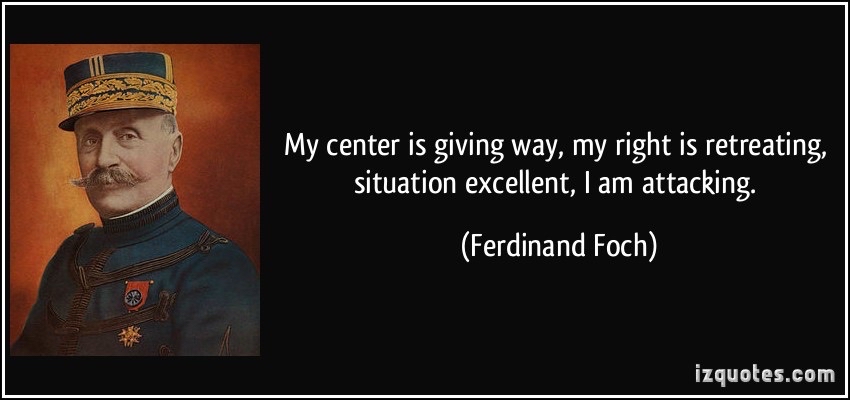
Dear reader, In the Fall of 1914, World War I was in full swing. French General Ferdinand Foch was selected to lead the newly formed Ninth Army. Only a week after taking command, however, the whole French Army was in full retreat and fighting a series of defensive manoeuvres.
On the night of 8 September, during the First Battle of the Marne, Foch wired to the French Commander-in-Chief Joseph Joffre: “My centre is giving way, my right is retreating, situation excellent, I am attacking.” His famed counterattack is today known as the “Miracle of the Marne”. It ultimately helped lead to victory on the Western Front, and Foch was the man who accepted the German surrender on 11 November 1918. A year later, he would lead a parade of French troops across Westminster Bridge in London (something Napolean could only dream of doing), and his statue still stands today near Victoria Station.
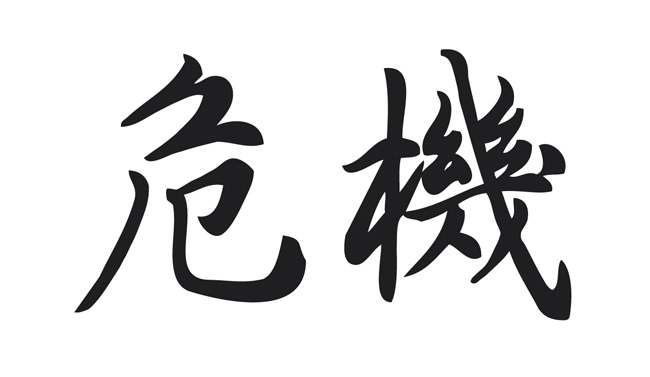
John F. Kennedy once stated that the Chinese word for “Crisis” (危机) is comprised of the characters for “Danger” and “Opportunity”. While not strictly true, this aphorism has been echoed throughout history.
I wrote last week about how the Obstacle is always the Way. That the very thing that stands in our way is often the opportunity that we seek.
The first step in any crisis is to control your emotions. To paraphrase Hemingway, things often happen slowly at first; and then all at once. When crises hit, they are sudden and brutal. People panic. And when they panic, they make mistakes. Clear, rational thinking eludes us at exactly the moment we need it most. Fight or flight reflexes kick in, and strong behavioural impulses urge us to follow the crowd. While this might have served us well in the savannahs of Africa (if everyone is running in a certain direction, it usually makes sense to run in that direction too), it does not serve us in the modern world.
During the US Space Program, NASA trained their astronauts in one skill above all others: not panicking. They had, as Tom Wolfe wrote, “the Right Stuff”. The Stoics had a strategy for this: asking better, logical questions:
“The stock market is crashing.”
“Isn’t that an opportunity to buy great businesses at bargain prices?”
Or:
“Our business is under pressure.”
“Maybe it’s time to cut off underperforming business lines, and double down on our strengths.”
Once we have our emotions under control, we can objectively look at the situation for what it is. Not better than it is; not worse than it is. Miyamoto Musashi, one of the greatest swordsmen to have ever lived, wrote in The Book of Five Rings about the difference between observing and perceiving. The observing eye is strong; the perceiving eye is weak. The observing eye sees only what is there: free from biases and distractions. The perceiving eye sees more than what is there: building a narrative that can take on a life of its own. Sometimes being superficial, and taking things only as they seem, can be a profound approach.
From there, we can take decisive action.
For in the seeds of every crisis, lives the genesis of opportunity.
Yours Sincerely,
Henry Chong
List of Businesses Started During Recessions:
Fortune magazine (ninety days after the market crash of 1929)
FedEx (oil crisis of 1973)
UPS (Panic of 1907)
Walt Disney Company (After eleven months of smooth operation, the twelfth was the market crash of 1929)
Hewlett-Packard (Great Depression, 1935)
Charles Schwab (market crash of 1974-75)
Standard Oil (February 1865, the final year of the Civil War)
Coors (Depression of 1873)
Costco (recession in the late 1970s)
General Motors (Panic of 1907)
Proctor & Gamble (Panic of 1837)
United Airlines (1929)
Microsoft (recession in 1973)
LinkedIn (2002, dot-com bubble)