Sunday Letter
Innovation? Innovation!
Dear reader, At the height of the Space Race, so the apocryphal story goes, NASA faced a unique challenge: how were they going to make their ballpoint pens work in gravity? Normal ballpoint pens rely on gravity to function. NASA spent millions of dollars in developing a pen that could write in zero-gravity, upside-down, underwater, and in both boiling and freezing temperatures. The end result was sheer American ingenuity: the Fisher Space Pen.
Years later, on the International Space Station, American Astronauts and Russian Cosmonauts met for the first time. One question the Americans were dying to know: how did the Russians manage to solve their pen problem?
Laughing, the Russian Cosmonaut said: “We used pencils.”
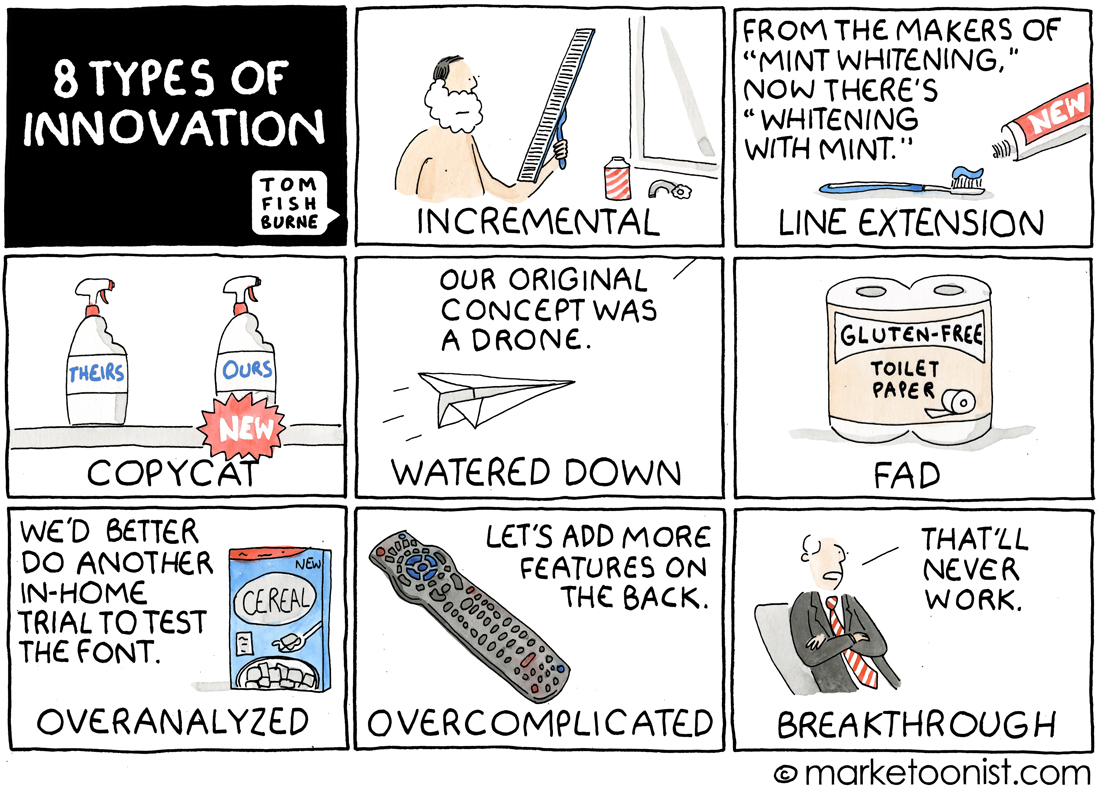
Innovation is a buzzword rocketing around boardrooms and classrooms alike. Consultants promise it. Managers of corporations fear it. But just what is “real innovation”?
In his book, Zero to One, Peter Thiel talks about the difference between incremental innovation, and going from 0 to 1. Incremental innovation is building a cool new app; going from 0 to 1 is coming up with the App Store in the first place.
Most innovation today is incremental. It is easy for managers to sign off on, and the results seem immediately apparent. Trying to come up with truly disruptive solutions is difficult, and fundamentally challenges and changes incumbent business models. This is why is many industries, such as Education and Finance, despite all the talk and hype, there has been little true disruption. Almost all students still go through traditional K-through-12 education systems; almost all money still flows through the system in fundamentally the same way it did 50 years ago.
There has likewise been a lot of talk recently about technology companies that focus on “bits”, versus those who focus on “atoms”: tech companies that produce software, versus those who innovate on “hard tech”. Once developed, software can be produced at almost 0 marginal cost. Development costs themselves are relatively low.
Hard tech, on the other hand, requires substantively more innovation. This is why many people thought Elon Musk was crazy when he first set out to build Tesla and SpaceX: two hard-tech companies, at the same time.
Solving harder problems, however, means that you will have invented a solution that is hard to others to replicate. You will have created true value.
Yours Sincerely,
Henry Chong