Sunday Letter
Predicting The Future
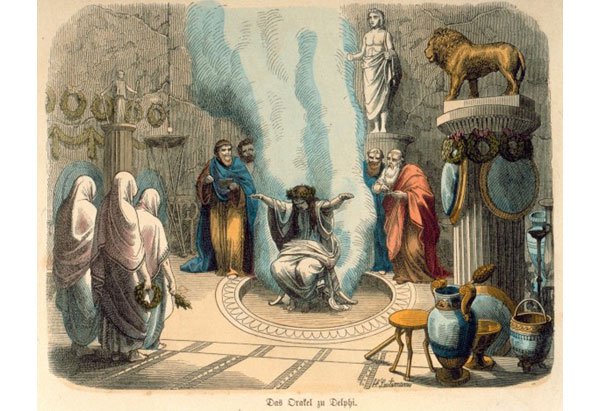
Dear reader, Sages and pundits alike have always attempted to predict the future. Contemplating both history and gazing into what is yet to be seems, as far as we know, to be a uniquely human endeavour. And for as long as people have attempted to predict the future they have been getting it wrong.
The first inscription at the Temple of Apollo in Delphi is renown: “Know Thyself”. Less well known is the second: “Nothing in excess”, admonishing temperance, and the third: “Surety, then ruin”, which Diogenes Laertius saw as an expression of skepticism, and an admonition to beware false certainty.
In Plato’s Apology, Socrates famously insisted that if he was wise, it was only because he recognised his own ignorance.
“ΕΓΓΥΑ ΠΑΡΑ ΔΑΤΗ
(Surety, then ruin)”
– Third Inscription at the Temple of Apollo in Delphi
In almost every industry, there are “oracles” proclaiming to know the future. In finance especially, there are people famous for predicting at different times that markets will both go up and down, and then later going back to point to only the prediction that was right. Harry Truman once jokingly asked for a “one-handed economist”, so that he couldn’t be told: “on the one hand… but then on the other hand…”
I don’t need to go through the countless predictions from people about how human flight, computers, or the Internet would never be possible, and would never have an impact on the world.
“Economists were put on earth to make astrologists look good.”
– The West Wing, Pilot Episode
What, then, should we do as aspiring crystal ball gazers?
Rather than trying to predict what will change in the future, it is much easier to figure out what won’t change, and then use backwards induction to figure out what to do now.
Both Jeff Bezos and Warren Buffett agree that you should invest in what stays the same. Bezos argues that: “When you have something you know is true, even over the long term, you can afford to put a lot of energy into it.” Building a business takes time, and focusing on what doesn’t change allows for investment and execution. For example, Amazon knows that customers will always want lower prices, faster delivery, and greater selection. By focusing massively on those things, they know that they can continuously add more value to customers than anyone else.
The same wisdom applies in your personal life. Most information today rapidly becomes outdated. For example if a doctor focuses on just accumulating knowledge, he will never be able to keep pace: the amount of medical knowledge is estimated to double every 73 days by the year 2020.
Instead, you need to focus on principles, not how-to tactics. On aligning with reality and getting the world to do the work for you.
Yours Sincerely,
Henry Chong