Sunday Letter
Public/Private Key Encryption
“There are two types of encryption: one that will prevent your sister from reading your diary, and one that will prevent your government.”
– Bruce Schneier
Dear reader, The use of increasingly strong and secure encryption protocols has recently become a major public policy issue. Apple and other tech giants have faced repeated requests from governments to build in “back-doors”, allowing for access to encrypted data. In response, many companies, such as WhatsApp, have built in “end-to-end encryption”, such that not even the companies themselves can decrypt and access the data.
The basis for most modern encryption is through the use of public/private keys. Unlike simple symmetrical key encryption, where the key used to both encrypt and decrypt a message is the same, public/private key encryption uses different keys to encrypt and decrypt the message. Symmetric key encryption requires that both the sender and the receiver of a message know the key, which therefore has to be transmitted in advance of the message. Public/private key encryption, on the other hand, allows for message to be sent between people who have never met. Below is a great explanation of how this all works:
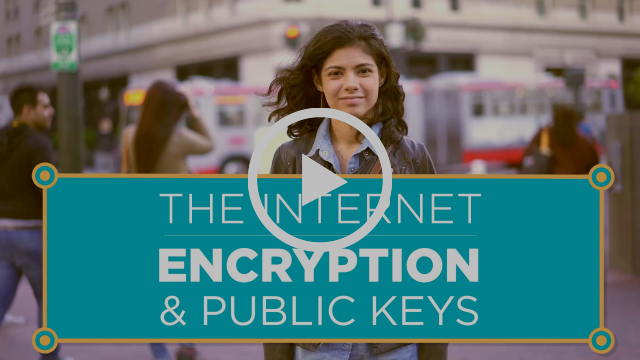
Public/Private Key Encryption
Public/private key encryption is a simple idea that seems obvious in hindsight, but has revolutionised almost all facets of modern communication. Rapid advances in computing power and data bandwidth means that everyone, on all devices, can now securely encrypt data and communications in a way that is almost impossible to crack. Modern apps such as WhatsApp have integrated encryption in a way that is transparent to the user (they don’t need to do anything to use it). By automatically turning on end-to-end encryption for all users, WhatsApp has created the single largest secured communications platform ever.
This technology is also the underpinning for how blockchains function, and the cryptocurrencies that are being built on top of them.
Yours Sincerely,
Henry Chong