Sunday Letter
The Lonely Mountain
Dear reader, Over the past few weeks I’ve written about the challenges facing the blockchain industry, the market potential during a gold rush, the current digital asset revolution, and Fusang’s Token Classification Framework.
Finally this week I will write about the single key issue that I believe must be solved before the blockchain industry can take off, and digital assets can become a widely traded asset class: Custody.
Digital Asset Custody so far has been challenging for two primary reasons: Security and Regulation.
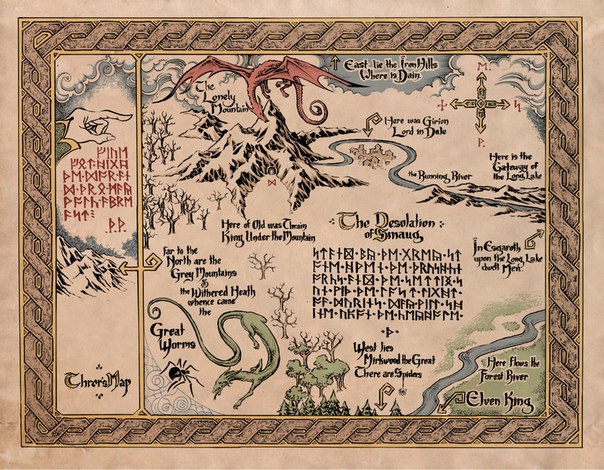
The bearer nature of digital assets means that its’ transfer is immutable and irreversible. Much like cash, if someone steals it, it is hard to reverse. This makes security of paramount importance. A digital asset custodian such as Fusang Vault is like the Lonely Mountain from Middle-Earth: a motherlode of treasure beset from all sides.
Most people do not realise how often banks make mistakes in fund transfers, or just plain misplace assets. In most cases, these mistakes are easily reversed. With digital assets, once the transfer is executed on-chain, it cannot be undone. Apart from malicious transactions, something as simple as sending a transfer to the wrong wallet address results in total and irreversible loss.
No matter the type of digital asset (bitcoin, ICOs, security tokens, etc.), all of these tokens are fundamentally controlled by the holder of a private key; the owner of such a key has full and immutable control over that asset. All people will need a place to store the keys for their digital tokens; storing such keys yourself is a non-trivial task. Further, I believe that when it comes to institutions, that storage place will need to be a centralised custodian. Even though we all keep some cash in our wallets, most people keep most of their money in a bank, not under their mattress. This issue will become even more acute when things like your house title are represented in digital token form.
The role of a Custodian extends beyond just keeping assets safe. There are many companies today providing digital asset storage services: whether in the form of software or hardware. But a Custodian is more than a safety-deposit box, where you can keep your assets temporarily. A true Custodian should hold and safeguard assets at all times, and be an independent third-party that acts as a check and balance.
For example, many people think that they can log in to their online banking platforms and execute fund transfers. In reality, this is simply an interface allowing customers to send instructions to the bank; the bank is the party that has to actually execute that transfer. Customers have no direct access to the banking system. With blockchain-based assets, however, it is possible for customers to interface directly with the blockchain transaction system. While allowing for a great deal of potential control by individuals, this also introduces a number of problems.
One simple example is with cryptocurrency hedge funds. In order for fund administrators to strike NAVs and report to the fund investors, they need to have a third-party report the fund holdings. It’s an obvious conflict of interest for the fund manager to be the only party reporting what they own. Another example is the fact that regulators will expect to be able to ask the Custodian to freeze wallets associated with illegal activity (just like with bank accounts today).
The Fusang Vault solves these problems by acting as a truly independent, compliant, and audited custodian. This means that we control clients’ wallets, and the associated private keys, at all times. Just like with a bank, clients send us instructions, and we execute upon them, being responsible for both ensuring that those instructions are legitimate, and that the transfer happens properly. This centralisation and loss of direct control is anathema to many people in the cryptocurrency industry.
Again, however, while such decentralisation is an attractive feature to many people, I believe that for large institutions such as pension funds and banks to be willing to enter this industry, there will need to be the same safeguards and regulated intermediaries that serve the “traditional” asset classes today.
Below is an excellent infographic highlighting the challenges facing digital asset storage today.
Yours Sincerely,
Henry Chong
