Sunday Letter
The Obstacle is the Way
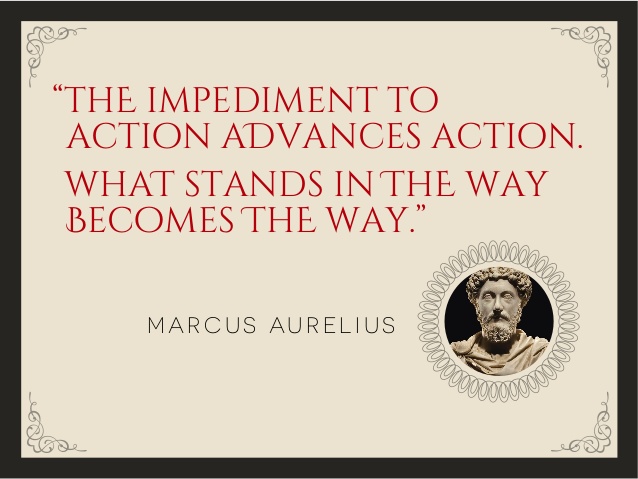
Dear reader, Marcus Aurelius, born in 121 AD, was known as the last of the Roman “Five Good Emperors”. He presided over a period of peace and prosperity, but his greatest modern legacy is the book he wrote: Meditations. It was written not as a dictum to others, or as an autobiography, but instead as a series of admonitions to himself. Lessons he had learned while dealing with the many trials and tribulations of life.
It is the only work of its kind: a private journal kept by a man who was as a god. An emperor with almost unchecked power, he sat down each night to detail his personal struggles: with Death, with War, and with Fate.
While Marcus Aurelius may have been an Emperor, his life was one of continual trial and sorrow. For him, life was a battle, and it must have often seemed a losing one. His years were spent in “warfare and a journey far from home”. Infidelity; a plague; constant attempts on the throne by his closest allies; eight of his children dying before himself; his only surviving son Commodus going on to begin the downfall of the Roman Empire; a depleting treasury; an incompetent and greedy stepbrother. Yet through it all he found ways to overcome.
A student of Stoic philosophy, Marcus Aurelius believed that “Our actions may be impeded…but there can be no impeding our intentions or dispositions. Because we can accommodate and adapt. The mind adapts and converts to its own purposes the obstacle to our acting. The impediment to action advances action. What stands in the way becomes the way.”
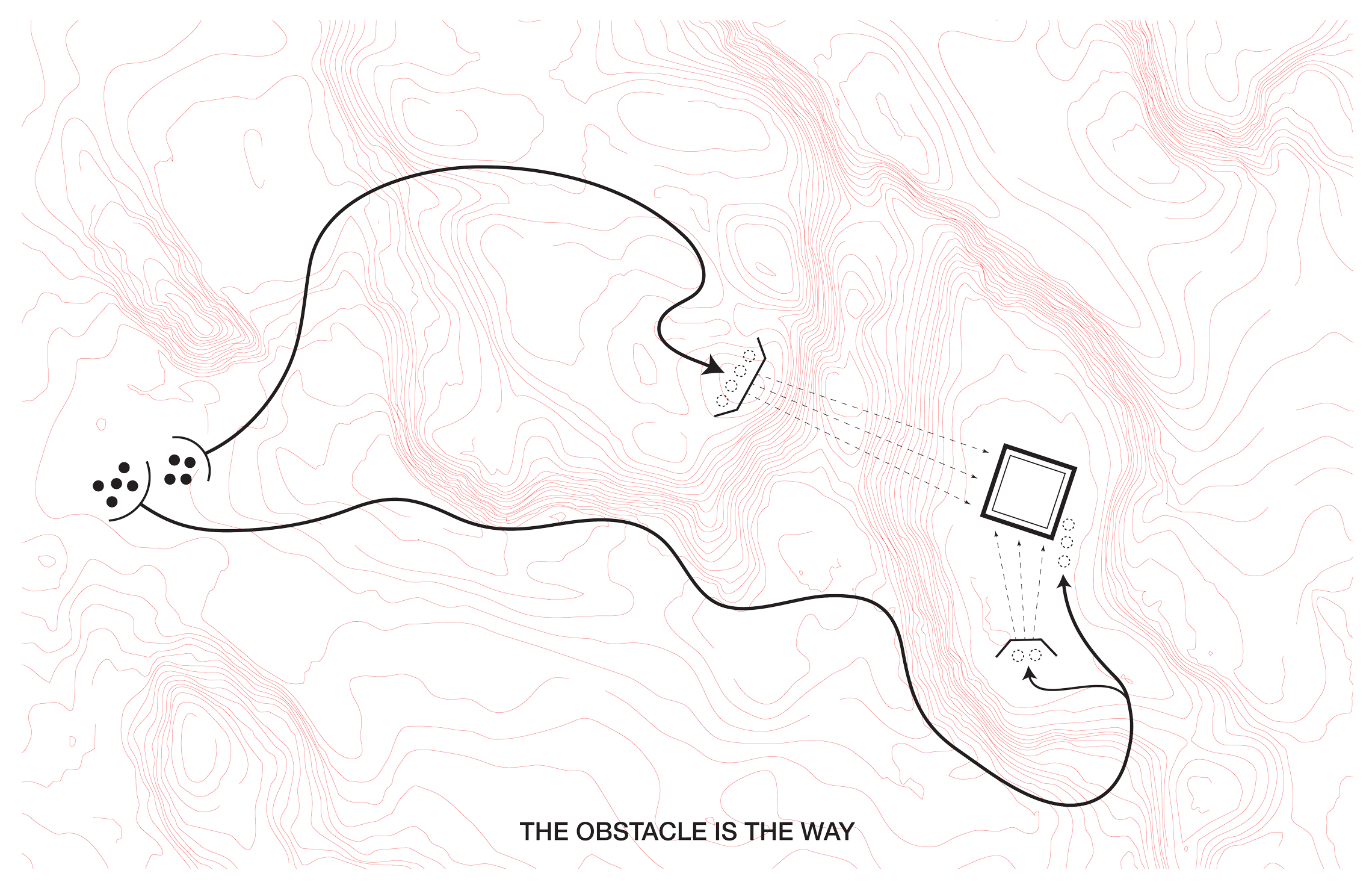
In World War II, the German Blitzkreig was steamrolling through Poland, the Netherlands, Belgium, and France. It seemed like an unstoppable force that would push the Allies all the way to the sea. In many cases, Allied commanders simply surrendered rather than face what must have seemed like an unbeatable enemy.
Striding into the Allied headquarters at Malta, General Dwight D. Eisenhower made an announcement to his fellow generals: “The present situation is to be regarded as opportunity for us and not disaster. There will be only cheerful faces at this conference table.” Eisenhower realised that within the strength of the Blitzkrieg lay the opportunity for their victory. The sheer speed of the Blitzkrieg meant that its flanks were constantly exposed. The Battle of the Bulge, what was seen at that time as a major Allied defeat, meant that the Blitzkreig was left deep in enemy territory, far away from its supply lines. The Allies were able to encircle the German Panzers within what Patton eloquently called a “meat grinder”.
In the Spring of 2008, Barack Obama’s Presidential campaign was hit by a race scandal involving his former pastor, Reverend Jeremiah Wright. Instead of deflecting the issue, or simply denouncing Reverend Wright, Obama decided to address the issue of race in America directly, and gave a speech called “A More Perfect Union”. That speech transformed his campaign, and galvanised the Democratic Party. He not only diffused a potentially fatal situation, but also claimed the moral high ground. Today it is one of the most famous Presidential speeches ever given.
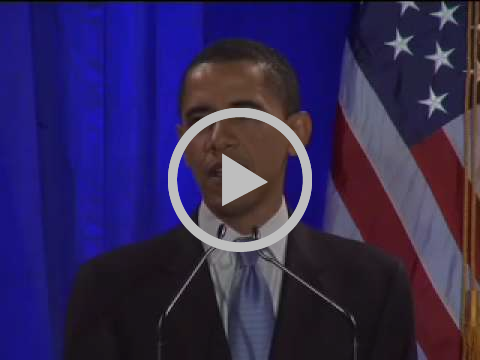
“A More Perfect Union” – Barack Obama, 18 March 2008
Obstacles will always crop up: in life, in business, and in the financial markets. The question is not whether they will arise, but how we deal with them. Everything that happens, whether a personal tragedy or an economic crash, is a chance to move forward.
The Obstacle is always the Way.
Yours Sincerely,
Henry Chong