Sunday Letter
Turning Lead Into Gold
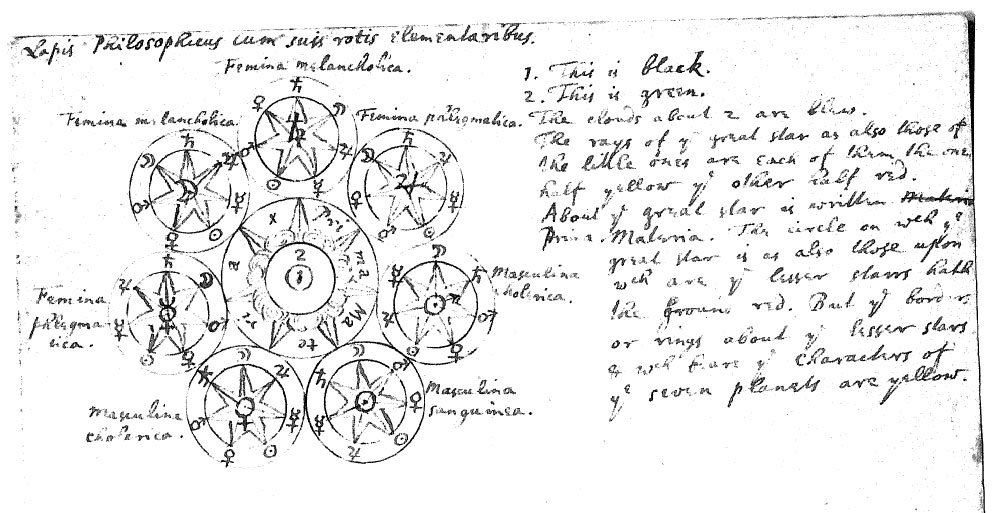
Dear reader, Isaac Newton is today known as a scientist, famous for his explorations into mathematics, optics, mechanics and gravity. But in his day he was known as a “natural philosopher”, as concerned with alchemy and astrology as he was with what we might today call “science”. Newton’s works totalled 10 million words: out of which 1 million dealt with the study of alchemy, or “chymistry” as it was known in 17th-century England.
In particular, Newton was fascinated with the search for the “philosopher’s stone”: the legendary artefact which could turn lead into gold. The stone was first mentioned in writing as far back as the Cheirokmeta, by Zosimos of Panopolis in 300 AD. Many trace its lineage back to Adam acquiring the stone from God, and passing it down through various biblical figures.

The Alchymist in Search of the Philosopher’s Stone
by Joseph Wright of Derby (1771)
With many great scientists and inventors, we remember only their star successes, and edit out their many mistakes and explorations down false roads. And because those central discoveries have now become accepted wisdom, those choices don’t seem terribly risky. It seems as though those scientists are on a straight road that inevitably leads to discovering truths that no one else had noticed before. It’s the apple falling on Newton’s head: a flash of inspiration that leads to Enlightenment in a single moment.
How, then, to explain all the time that Newton spent on alchemy and the occult? Was he part genius, part lunatic?
Or perhaps genius and lunacy are two sides of the same coin. Newton’s work on gravity today seems a promising thing to work on; alchemy a waste of time. But that is only with the benefit of hindsight. To Newton, both fields must have seemed equally promising. Indeed, the potential payoff from alchemy must have seemed far more compelling, which is why it was so popular. If anyone had known the potential payoff from explorations into gravity, more people would have been working on it.
Alchemy then was still in the category that Marc Andressen would have called “huge, if true”. Newton made multiple “bets”, exploring multiple areas. Only some of them worked. But they were all risky at the time.
Yours Sincerely,
Henry Chong